
News
What Makes a Dashcam for Motorcycle Traffic Enforcement Reliable on the Road?
A motorcycle traffic enforcement dashcam must do more than simply record road scenes. It needs to capture clear evidence, preserve critical details, withstand vibration and changing weather conditions, and help enforcement teams review incidents efficiently. This guide explains the essential features, practical applications, installation considerations, evidence requirements, and purchasing factors that organizations should evaluate when selecting a professional motorcycle dashcam.
Article Summary
Motorcycle traffic enforcement presents a unique challenge. Officers and enforcement personnel need mobility without sacrificing video quality, operational reliability, or evidence integrity. A properly designed dashcam for motorcycle traffic enforcement can continuously document road conditions, traffic violations, dangerous driving behavior, collisions, and other incidents from the motorcycle rider's perspective. Key capabilities include high-resolution video, wide-angle coverage, GPS positioning, accurate time data, loop recording, impact protection, low-light performance, weather resistance, secure storage, and easy evidence retrieval. The right system should also be compatible with the motorcycle's power supply and designed to remain stable under vibration and movement.
Table of Contents
- Understanding Motorcycle Traffic Enforcement Dashcams
- Why Motorcycle Enforcement Requires Specialized Recording
- Essential Features for Enforcement Applications
- How Video Recording Supports Traffic Evidence
- Key Specifications at a Glance
- Installation and Motorcycle Integration
- From Roadside Capture to Evidence Review
- Practical Applications
- Purchasing and Deployment Considerations
- Why Professional Hardware Design Matters
- Frequently Asked Questions
- Final Considerations
1. Understanding Motorcycle Traffic Enforcement Dashcams
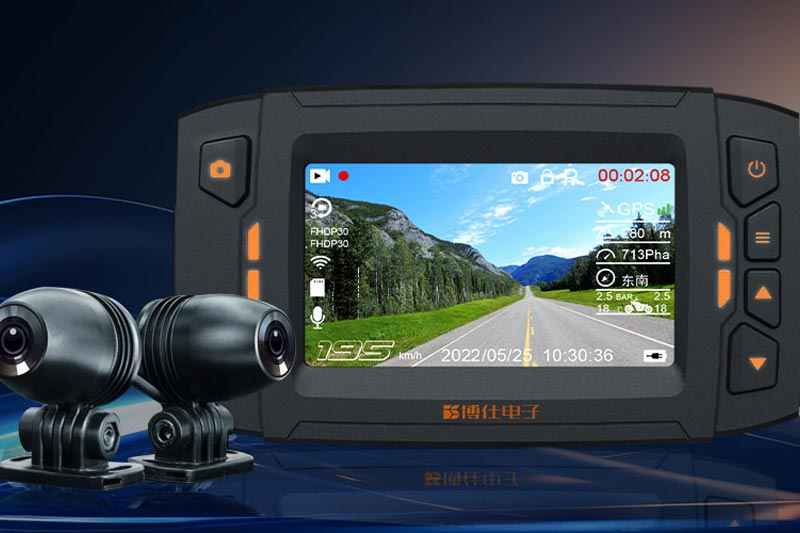
A dashcam for motorcycle traffic enforcement is a compact video recording system designed to operate on a moving motorcycle while documenting traffic activity around the rider. Unlike ordinary consumer cameras, enforcement-oriented systems are expected to perform consistently in demanding road environments where vibration, changing light, rain, temperature variation, and rapid movement are common.
The primary purpose is not simply to create attractive footage. The camera should produce useful visual records that allow authorized personnel to reconstruct an incident, identify relevant vehicles, understand road positioning, and review what happened before, during, and after an event.
This distinction is important because traffic enforcement often depends on context. A short video clip may show the result of a traffic violation, while continuous or buffered recording can provide information about vehicle movement, road markings, signals, lane position, and surrounding traffic.
Official enforcement guidance in some jurisdictions places considerable emphasis on details such as date, time, location, vehicle identification, data integrity, and secure evidence handling. Requirements differ by jurisdiction, so a dashcam should be evaluated against the rules applicable to its intended deployment rather than assuming that ordinary consumer footage automatically qualifies as formal enforcement evidence. :contentReference[oaicite:0]{index=0}
2. Why Motorcycle Enforcement Requires Specialized Recording
Motorcycles provide exceptional mobility for traffic patrols, but they also create a difficult environment for electronic equipment. A camera mounted on a motorcycle experiences continuous vibration, acceleration, braking, cornering, wind exposure, and rapid changes in viewing direction.
Vibration
Engine and road vibration can affect image stability and mechanical connections.
Rapid Movement
Traffic scenes can change within seconds, making wide coverage and fast capture important.
Lighting Changes
Patrols may move from bright sunlight into tunnels, shaded streets, or nighttime environments.
Weather Exposure
Rain, dust, humidity, and temperature changes can challenge exposed equipment.
Another major challenge is perspective. A motorcycle-mounted camera generally sees the road from a lower and more dynamic position than a vehicle-mounted enforcement system. This makes mounting position, lens coverage, image stabilization, and camera orientation particularly important.
A professional solution therefore needs to balance compact size with reliable imaging and secure installation. A larger camera is not automatically better; equipment that interferes with the rider, obstructs controls, or creates excessive wind resistance may reduce operational effectiveness.
3. Essential Features for Enforcement Applications
Hidden subsection
When selecting equipment, buyers should evaluate the complete recording system rather than focusing on resolution alone. A camera with high pixel specifications may still produce weak evidence if its nighttime image quality, storage reliability, lens performance, or mounting system is inadequate.
- High-resolution recording: Helps preserve important visual details such as road signs, vehicle characteristics, lane markings, and surrounding traffic.
- Wide-angle coverage: Provides greater situational awareness and helps reduce blind areas around the motorcycle.
- Stable image capture: Reduces the effects of motorcycle vibration and uneven road surfaces.
- Accurate time information: Helps establish when an event occurred and organize recorded footage.
- GPS positioning: Can associate recordings with geographic information when supported by the system.
- Loop recording: Allows continuous operation by automatically managing storage when the memory card becomes full.
- Event protection: Important footage should be protected from being accidentally overwritten.
- Low-light capability: Supports patrols conducted during evenings, nights, or poorly illuminated conditions.
- Weather resistance: Valuable for equipment exposed to outdoor operating conditions.
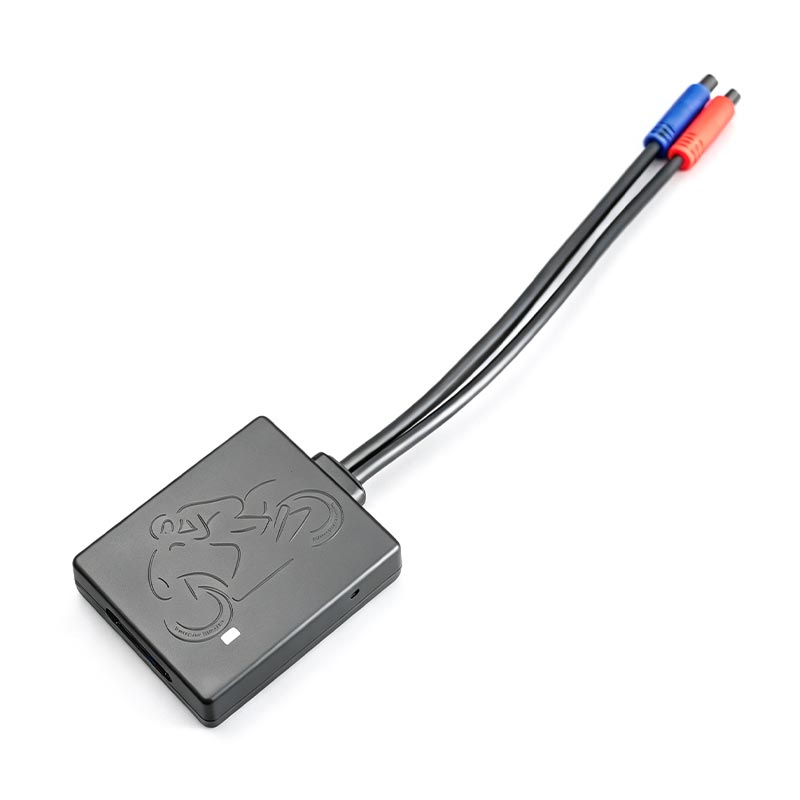
- Reliable storage: Recording media should be selected according to the manufacturer's supported specifications and expected recording workload.
GPS and time data can be particularly useful for documenting the circumstances surrounding an event. Modern enforcement systems may use synchronized timing and location information as part of a broader evidential record. For example, official technical guidance for enforcement equipment emphasizes the importance of traceable time synchronization and embedded information associated with recorded images. :contentReference[oaicite:1]{index=1}
4. How Video Recording Supports Traffic Evidence
The value of a motorcycle enforcement camera comes from its ability to preserve a clear and understandable sequence of events. Instead of relying exclusively on a written description, authorized personnel can review visual information that shows the surrounding traffic environment.
Evidence process
A useful recording should help answer five practical questions:- Where did the incident happen?
- When did it happen?
- Which vehicle or road user was involved?
- What occurred immediately before and during the event?
- Can the recording be retrieved and reviewed without unnecessary uncertainty?
For this reason, continuous recording can be particularly valuable. A camera that only records after a button is pressed may miss the critical moments immediately preceding an incident. Buffered or event-triggered recording can help address this limitation where the equipment supports it.
However, recording capability should not be confused with legal admissibility. Whether footage can be used as formal evidence depends on local legislation, agency procedures, device certification, data handling practices, and other requirements. Some enforcement standards require information such as date, time, location, vehicle identification, or secure storage to be demonstrably associated with the evidential record. :contentReference[oaicite:2]{index=2}
Motorcycle dashcam footage can also provide useful corroborating information in collision investigations. Real-world legal proceedings have demonstrated how dashcam and helmet-camera footage can help investigators reconstruct road incidents and assess vehicle movement. :contentReference[oaicite:3]{index=3}
5. Key Specifications at a Glance
| Feature | Why It Matters | Buyer Consideration |
|---|---|---|
| Video Resolution | Preserves important visual details | Consider clarity in both daytime and nighttime scenes |
| Lens Coverage | Expands the visible traffic area | Balance wide coverage with image distortion |
| GPS | Can associate footage with location information | Confirm accuracy and data-recording behavior |
| Time Stamp | Helps establish event timing | Check synchronization and timestamp format |
| Loop Recording | Supports continuous patrol recording | Verify protected-event behavior |
| Vibration Resistance | Maintains stability on moving motorcycles | Evaluate mount and camera housing together |
| Weather Protection | Improves reliability outdoors | Select protection appropriate to deployment conditions |
6. Installation and Motorcycle Integration
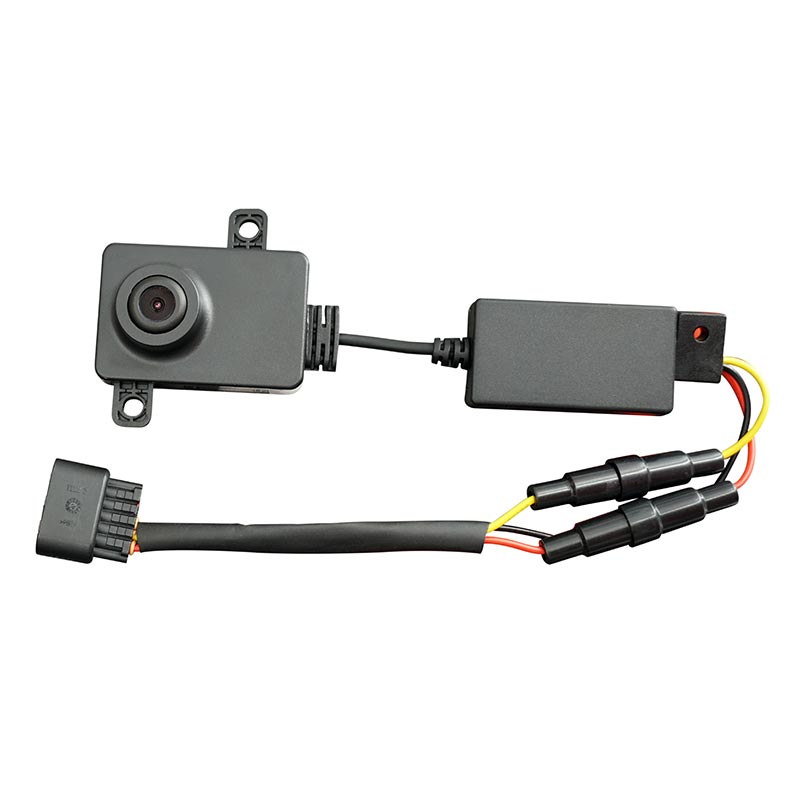
Even a high-quality camera can underperform if it is poorly installed. Motorcycle deployment requires careful consideration of camera position, viewing angle, wiring, power supply, mounting strength, and rider ergonomics.
- Choose a stable mounting location. The camera should have a clear view without interfering with steering, instruments, lights, or rider movement.
- Minimize vibration. The mount should be mechanically secure and suitable for the motorcycle's operating environment.
- Protect cables. Wiring should be routed away from moving or high-temperature components.
- Consider power management. The system should operate reliably with the motorcycle's electrical architecture.
- Check the viewing angle. The camera should capture enough road context while keeping key areas sufficiently detailed.
- Test before deployment. Daytime, nighttime, stationary, and moving tests can reveal problems that are not obvious during installation.
A practical installation should also allow authorized personnel to access the device for maintenance, storage replacement, configuration checks, or evidence transfer without unnecessarily dismantling the motorcycle.
7. From Roadside Capture to Evidence Review
Recording is only one part of an effective enforcement workflow. A well-designed deployment should establish a clear process for capturing, protecting, transferring, reviewing, and retaining footage.
01
Capture
Capture
02
Protect
Protect
03
Transfer
Transfer
04
Review
Review
05
Archive
Archive
This workflow becomes especially important when footage may be used for administrative review, incident investigation, insurance documentation, or formal enforcement procedures. The handling process should be aligned with the organization's evidence policies and applicable local requirements.
Some official enforcement systems use protected storage, secure data transmission, unique evidence identifiers, and controlled evidence records to help preserve data integrity. These approaches illustrate why the recording device should be considered part of a larger evidence-management process rather than an isolated camera. :contentReference[oaicite:4]{index=4}
8. Practical Applications
A motorcycle dashcam can support several operational scenarios beyond traditional traffic violation documentation.
- Traffic patrols: Documenting road activity during routine motorcycle patrols.
- Speed and dangerous-driving investigations: Providing visual context for incidents that require further review.
- Red-light and lane violations: Recording road positioning and traffic-signal conditions where appropriate.
- Collision investigation: Preserving visual information that may help reconstruct an incident.
- Road safety monitoring: Identifying recurring hazardous locations or traffic behaviors.
- Public-service patrols: Creating operational records for authorized agencies.
- Training: Using anonymized or appropriately handled footage to improve officer and rider awareness.
Motorcycle-based enforcement can be particularly useful in dense urban environments where larger vehicles have difficulty reaching narrow streets or moving through congested traffic. The combination of mobility and continuous recording can give enforcement teams a different perspective from fixed cameras or conventional patrol vehicles.
9. Purchasing and Deployment Considerations
Organizations purchasing motorcycle traffic enforcement cameras should avoid evaluating products solely by advertised resolution or price. A lower-cost device may become expensive if it requires frequent replacement, produces unclear footage, lacks suitable storage management, or cannot withstand the intended operating environment.
Before purchasing, consider the following checklist:
- What traffic violations or incidents need to be documented?
- Will the camera operate during daytime, nighttime, or both?
- Is GPS information required?
- How accurate and configurable is the timestamp?
- How much recording time is needed per patrol?
- How are important clips protected from automatic overwriting?
- How will footage be transferred from the motorcycle?
- What weather and temperature conditions will the equipment encounter?
- Does the mounting system tolerate continuous motorcycle vibration?
- Can the solution be customized for different motorcycle models?
- What after-sales technical support is available?
Buyers should also request practical demonstrations rather than relying entirely on specification sheets. Testing footage on representative roads can reveal differences in license-plate visibility, motion handling, nighttime performance, glare control, and image stability that are difficult to judge from numerical specifications alone.
10. Why Professional Hardware Design Matters
For organizations deploying cameras across multiple motorcycles, consistency is as important as individual camera performance. A professional supplier should be able to discuss installation conditions, power requirements, recording configurations, storage capacity, housing design, mounting options, and deployment support.
Dongguan Boshi Electronic Technology Co., Ltd. can position its motorcycle camera solutions around practical deployment needs, helping customers evaluate the relationship between camera hardware, mounting structure, recording requirements, and operational scenarios.
For fleet deployments, buyers should also consider whether the supplier can support different motorcycle configurations and provide technical assistance when installation conditions vary. A scalable approach can make equipment standardization easier when a traffic enforcement organization expands its patrol fleet.
The most effective solution is therefore not necessarily the camera with the longest feature list. It is the system that produces dependable recordings under real operating conditions while fitting the organization's workflow and applicable requirements.
11. Frequently Asked Questions
FAQ 1
Can a motorcycle dashcam record traffic violations?
It can record visual information related to traffic violations, but whether the footage can be used as formal enforcement evidence depends on local laws, agency procedures, equipment requirements, and evidence-handling practices.
FAQ 2
Why is GPS useful in a motorcycle enforcement camera?
GPS can associate recordings with geographic information and may also support accurate time synchronization, depending on the system design. This can make footage easier to organize and investigate.
FAQ 3
Does a higher video resolution always provide better evidence?
Not necessarily. Resolution is important, but lens quality, exposure control, low-light performance, frame rate, stabilization, compression, viewing angle, and mounting stability can all influence the usefulness of recorded footage.
FAQ 4
Should motorcycle enforcement cameras record continuously?
Continuous or loop recording is often useful for patrol operations because it reduces the risk of missing an incident. Important recordings should have a suitable protection mechanism so they are not overwritten.
FAQ 5
What should motorcycle enforcement camera buyers test before deployment?
Buyers should test image clarity, nighttime performance, vibration resistance, viewing angle, GPS and timestamp behavior, storage reliability, mounting stability, power consumption, weather performance, and footage retrieval procedures.
FAQ 6
Can the same camera be used on different motorcycle models?
In many deployments, the camera itself can be used across multiple motorcycles, but mounting brackets, wiring, power connections, and installation positions may need to be adapted to each motorcycle model.
12. Final Considerations
A reliable Dashcam for Motorcycle Traffic Enforcement should be viewed as part of a complete mobile recording solution rather than simply a small camera mounted on a motorcycle. High-quality imaging, stable mounting, reliable storage, accurate time information, GPS capability, weather resistance, and efficient evidence management all contribute to practical performance.
The best deployment starts with a clear understanding of the operating environment and the organization's evidence requirements. By testing equipment under realistic road conditions and considering the complete workflow from capture to review, enforcement teams can reduce missed footage, improve incident documentation, and build a more dependable mobile recording system.
If you are looking for a motorcycle traffic recording solution that can be adapted to professional patrol and enforcement applications, Dongguan Boshi Electronic Technology Co., Ltd. can help evaluate suitable camera configurations, installation requirements, and deployment needs. For product details, customization discussions, or project support, contact us to discuss your requirements.
Related News
- What Makes an IP65 Waterproof Dual-Lens Motorcycle Dash Cam Essential for Safer Riding?
- Collision-Sensing Locking Dual-Lens Motorcycle Dash Cam Enhances Riding Safety with BOSHI Technology
- How Does a Single-Lens Motorcycle Dashcam Protect Riders on Every Journey?
- How Can a Dual-Lens Motorcycle Dash Cam Improve Riding and Parking Protection?
- How Does Loop Recording Help Motorcycle Riders Keep Continuous Road Footage?
- Locator Market Shifts from Basic Tracking to Intelligent IoT Nodes
Leave me a message